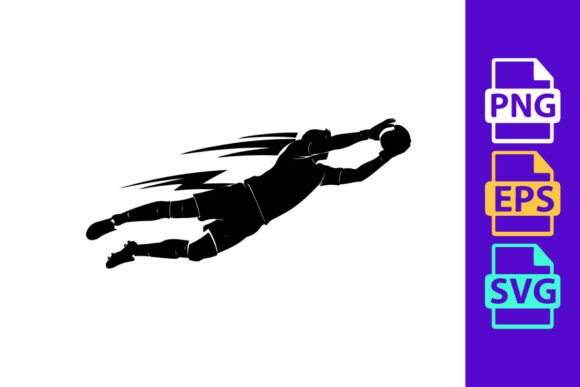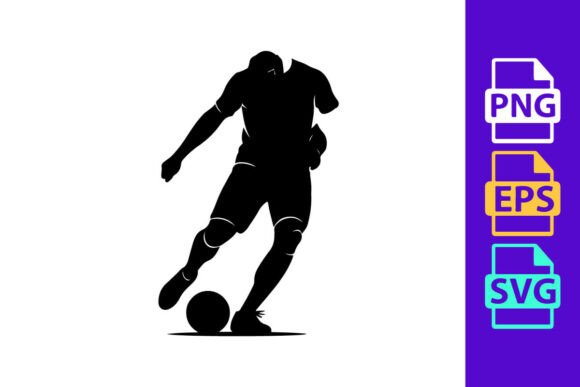
Capture Dynamic Motion: Soccer Player Kicking a Ball in Action
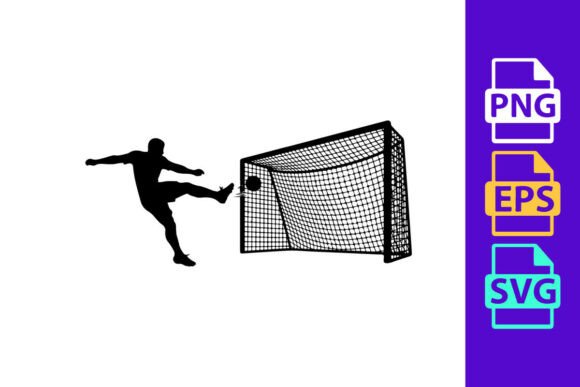
In the world of sports design, static images often fall short. They fail to convey the adrenaline, the split-second decision, and the explosive power that defines the game. If you are a designer, marketer, or entrepreneur looking to inject raw energy into your visuals, the Soccer Player Kicking a Ball in Action O clipart is a game-changer. This isn't just a generic shape; it is a carefully crafted narrative of movement frozen in time, designed to tell a story of athleticism and competition instantly.
Anatomy of a Dynamic Silhouette
At its core, the Soccer Player Kicking a Ball in Action O design relies on the principle of negative space and bold contour. The visual characteristics are defined by clean, unbroken lines that outline the player's form—knee bent, leg extended, and body pivoted for maximum impact. The "O" in the title often implies the open, looped nature of the composition, perhaps framing the player or the ball, creating a focal point that draws the eye immediately.
Unlike cluttered stock photography, this silhouette relies on high contrast. It strips away the noise of a jersey, facial features, or stadium background, leaving only the pure essence of the sport. This minimalism is its greatest strength. It possesses a modern typography aesthetic—geometric yet organic—allowing it to communicate speed and precision without needing a single word of text. The style is versatile; it feels equally at home in a gritty, urban streetwear context as it does in a polished, corporate sporting event brochure.
Practical Applications Across Industries
Understanding where to deploy this asset is just as important as the design itself. For those in the print-on-demand space, the Soccer Player Kicking a Ball in Action O is a perfect candidate for apparel. Because the design is a clean silhouette, it translates beautifully onto dark fabrics using white ink, or onto light fabrics using bold spot colors. It avoids the "busy" look that often plagues sports merchandise, offering a more sophisticated, streetwear-inspired vibe.
For social media graphics, the scalability of this vector design is vital. Whether you are creating an Instagram Story highlight cover or a Facebook event banner, the image remains crisp. It serves as an excellent "spot illustration" to break up text-heavy posts. You can pair it with a sans serif font for a clean, modern look, or a handwritten font for a more energetic, graffiti-style vibe.
Furthermore, in editorial design, such as sports magazines or school newsletters, this clipart can act as a dynamic drop cap or a section divider. It reinforces the theme without competing with the headline typography. For brand identity, youth soccer clubs, local leagues, and sports bars can use this image to create logos or merchandise that feel professional yet accessible.
Design Strategy: Pairing and Perception
Using the Soccer Player Kicking a Ball in Action O effectively requires a bit of strategic thinking regarding visual hierarchy. When this silhouette is placed next to text, it naturally commands attention due to its bold, black (or dark) mass. You should balance this weight with your typography. If you are using a heavy display font for your headline, consider scaling the silhouette down slightly so they don't compete for dominance.
Color psychology plays a role here as well. While the file likely comes in black, recoloring the vector to match your brand identity can unify the design. A neon green silhouette on a dark background screams "esports" and digital energy, while a navy blue silhouette suggests tradition and stability. This flexibility allows the asset to adapt to different market segments, from high-energy gaming channels to prestigious athletic academies.
Technical Execution and File Usage
For the uninitiated, working with vector files (SVG, EPS) versus raster files (PNG) is a crucial distinction. The Soccer Player Kicking a Ball in Action O provides the best of both worlds. The PNG file, with its transparent background, is a drag-and-drop solution for quick mockups in Canva or Photoshop. However, the real power lies in the vector formats.
If you are creating a large-scale banner or a vehicle wrap, you cannot use a PNG—it will pixelate and look unprofessional. The vector format ensures that whether the image is the size of a postage stamp or a billboard, the edges remain perfectly smooth. This is essential for packaging design or signage where print quality is non-negotiable.
Step-by-Step Integration Guide
Here is a practical workflow for integrating this asset into your next project:
- Assess the Context: Before placing the image, look at your layout's "negative space." The silhouette needs room to "breathe." Don't crowd it against the edge of the page or other heavy graphics.
- Customize the Color: Open the EPS or SVG file in Adobe Illustrator or Affinity Designer. Select the shape and apply a color that aligns with your campaign. Avoid pure black if you are printing on newsprint; use a rich black (C=60, M=40, Y=40, K=100) for depth.
- Check Font Pairings: Place the silhouette next to your text. If you are using a serif font for a classic sports magazine look, ensure the silhouette's weight matches the stroke width of the serif letterforms.
- Test for Scalability: Zoom in on your design to 200%. Check that the silhouette doesn't overpower the text at this size, or conversely, that it doesn't get lost when viewed on a mobile phone screen.
The Soccer Player Kicking a Ball in Action O is more than just a piece of clipart